
Open Letter to All Tigrayans and Tigray-Affiliated Institutions Across the World
By UMD Media / Oct 4, 2026 / 7 min read
October 5, 2026
By a Concerned Tigrayan
Background and Purpose
The public advocacy by some actors for the establishment of an Amhara Regional State administration in the “liberated” areas of Raya-Azebo has prompted me to prepare this legal note.
According to Dr. Abreham Belay, the federal government is working to establish a new temporary administrative structure in Tigray Regional State, with the aim of facilitating a transition toward regional elections in Tigray Regional State.
If this is indeed the direction being pursued, the immediate question is how such an interim arrangement can be structured in a manner consistent with the FDRE Constitution, applicable federal and regional laws, the rights of internally displaced persons, and the requirement that any future determination concerning the so-called “contested areas” be made through a lawful and constitutionally prescribed process.
This note therefore addresses the conditions necessary for the safe, immediate, and voluntary return of internally displaced persons; the legal basis and limits of interim local administration in “contested areas”; the constitutional framework governing questions of regional identity and inter-regional state borders; the legal implications of establishing or maintaining de facto administrative or security structures outside that framework; and the principles that should govern any eventual permanent settlement.
Consequently, I offer the following views.
Safe, Immediate, and Voluntary Return of Internally Displaced Persons
If, as previously argued by the federal government, the TPLF was responsible for preventing the return of over 760,000 internally displaced persons (IDPs), specifically from Western Tigray, who are currently living in shelters in other parts of the Tigray Regional State, the federal government should now take the necessary measures to create a conducive and secure environment for their safe, immediate, and voluntary return to their homes in Western Tigray Zone.
This should include the dissolution of ad hoc local administrative arrangements in Western Tigray and Southern Tigray; the disarmament of the group referred to as “Tekezze Zeb”; and the orderly relocation, in accordance with the present constitutional framework, other applicable law, and due process, of persons who settled in the area en masse following the 2020 war between the TPLF and the federal government and who are alleged to have settled there with the intention of altering the demographic balance of the area.
De Facto Administrative and Security Structures
The “Welkait-Tegede Amhara Identity Restoration Committee,” “Tekeze Zeb,” and “Rayya Zeb” should not be permitted to function as de facto administrative or security structures outside the constitutional framework. Their continued operation in Western Tigray and Southern Tigray Zones risks prejudging the outcome of any future identity or inter-regional state border dispute and undermining the possibility of a lawful, inclusive, and impartial process.
Human Rights Concerns and Conditions for Return
Recent findings by Human Rights Watch have further underscored the urgency of addressing these conditions. According to its April 2026 findings, officials previously identified as being involved in orchestrating mass displacement remained in their positions, while discriminatory practices affecting Tigrayans, including restrictions relating to identification documents, movement, and employment, continued.
A substantial number of people displaced from Western Tigray remain unable to return, including people residing in central Tigray and refugees in Sudan. Although the federal government has publicly endorsed their eventual return, the conditions necessary to make that return safe and voluntary must now be established in practice.
The officials identified in 2022 as orchestrating mass displacement remain in their posts. Land, buildings, and houses previously owned by Tigrayans have reportedly been redistributed to new settlers and investors, while some Tigrayans have been limited to day labor under conditions described as exploitative. More than 760,000 internally displaced persons (IDPs), particularly from Western Tigray, reportedly remain unable to return.
At a minimum, the federal government should facilitate the return of those internally displaced persons currently residing in areas where it has the capacity to do so and enable them, on an interim basis, to administer their communities through locally elected representatives under the auspices of a Tigray Regional Provisional Administration to be established at the regional level, pending a permanent administrative arrangement.
Southern Tigray and Tselmetti Woreda
The same principles should apply to Southern Tigray Zone and Tselmetti Woreda, currently within North-Western Tigray Zone. The situation in these areas should be addressed through the safe and voluntary return of displaced residents; appropriate interim administrative arrangements; restoration of legitimate local governance; and, ultimately, a permanent administrative settlement reached through a lawful, inclusive, and constitutionally grounded process.
Constitutional Framework for Identity and Inter-Regional State Border Questions
Any question concerning identity or an inter-regional state border involving these areas of Tigray, if raised or pursued in accordance with the Constitution, should be addressed strictly in accordance with the FDRE Constitution and other applicable laws of Ethiopia.
Pending the final resolution of any such dispute, if raised or pursued in accordance with the Constitution, the existing regional boundaries should remain unchanged.
Any adjustment to those boundaries should take effect only after a final determination has been reached through the constitutionally prescribed legal process, taking into account the principles, procedures, practices, and precedents applied in resolving previous inter-regional border disputes and identity questions within the Ethiopian federation since 1995.
Displacement and the Legitimacy of Any Constitutional Process
Most importantly, no legitimate determination of an identity question, inter-regional state border dispute, or popular consent can be made while the affected population remains forcibly displaced and excluded from the process.
The return of internally displaced residents is therefore not merely a humanitarian concern; it is an essential prerequisite for any credible and legitimate resolution of the underlying political and administrative questions, as well as for the meaningful exercise of self-determination and democratic participation.
The displacement itself is the instrument that makes the constitutional process impossible. The settler population and the Tekeze Zeb militia function as the enforcement mechanism for a demographic fait accompli that forecloses any lawful resolution.
A Call for Unified Tigrayan Political Attention
I therefore strongly recommend that all concerned stakeholders and Tigray’s political parties, including “TPF” and Simret, devote their political attention, expertise, and resources to this critical matter.
The safe, immediate, and voluntary return of all displaced residents from Western and Southern Tigray should be treated as a central priority in the present context, without allowing internal political disagreements to undermine issues that directly affect the national interests of Tigray.
The absence of a unified Tigrayan political voice capable of consistently championing the safe-return agenda would make the return of IDPs considerably more difficult, if not impossible, and could thereby further undermine the national interests of Tigray.
What is required is unified political leadership committed to a peaceful and lawful resolution, coupled with a security environment in which displaced residents can return voluntarily, safely, and with dignity and security.
Safe return must come first. Only a process in which displaced communities are able to return safely, participate meaningfully, and freely express their views can produce a legitimate and durable administrative settlement, whether on an interim or permanent basis.
Interim Civilian Administration
Until a formal provisional local administration is established by the competent authorities, the Tigray Peace Force (TPF), insofar as it exercises effective control over particular areas of Southern Tigray, should facilitate the organization of interim civilian administrative structures rather than independently purporting to establish governmental authority.
Given the absence of currently functioning and legitimate local administrative institutions in these areas, such interim arrangements are particularly important to ensure continuity of civilian governance, the delivery of essential public services, and the protection of the rights and interests of local residents.
These arrangements should be strictly civilian, locally representative, temporary, and accountable. They should serve solely as a transitional mechanism pending the establishment of a formal provisional local administration for the concerned areas and other parts of Tigray Regional State.
The immediate priority should therefore be to create conditions in which displaced residents can return safely and voluntarily, local communities can participate meaningfully in their own administration, and any questions concerning identity and inter-regional state borders can ultimately be addressed through a lawful, inclusive, and constitutionally grounded process.
Conclusion
The immediate priority should therefore be to create conditions in which displaced residents can return safely and voluntarily, local communities can participate meaningfully in their own administration, and any questions concerning identity, inter-regional state borders, and permanent administrative status can ultimately be addressed through a lawful, inclusive, and constitutionally grounded process.
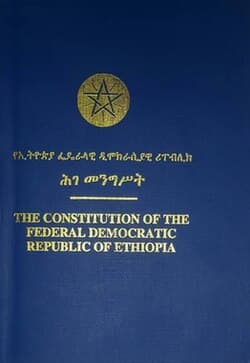
The constitutional framework does not permit political or military control of territory, standing alone, to substitute for the procedures established for determining state boundaries. Article 48 specifically provides a mechanism for resolving inter-state border disputes, while Article 52 recognizes the authority of regional states to establish administrations within the constitutional order.
The legitimacy of any eventual settlement will therefore depend not only on the administrative arrangement established in the interim, but also on whether displaced communities are able to return, participate freely, and have their rights and views meaningfully considered.
Safe, immediate, and voluntary return should be the immediate priority. Any question or dispute concerning identity, administration, or inter-regional state borders should ultimately be addressed through the constitutional framework and the applicable legal processes.