
Abiy Ahmed’s Media Authority Indefinitely Suspends The Reporter After 31 Years of Publication, Just Two Days After Press Freedom Warning
By UMD Media
Published
5 min read
15 views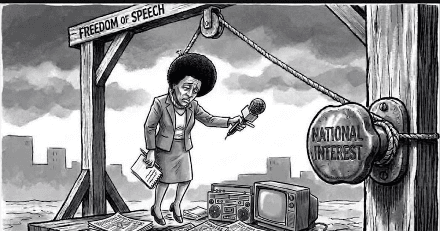
November 2, 2026
Ethiopia’s Media Authority of PM Abiy Ahmed has indefinitely suspended The Reporter, one of the country’s longest-running privately owned newspapers, ordering an immediate halt to its Amharic and English print publications and digital operations.
The decision, effective Monday, November 2, 2026, comes just two days after the newspaper published an editorial titled “Press Freedom Is Not A Luxury!”, warning about mounting threats to independent journalism in Ethiopia and calling on the very authority that has now suspended it to safeguard its regulatory independence.
The suspension affects the Media and Communications Center (MCC), publisher of the Amharic Reporter, the English-language The Reporter, and its online news platforms.
Media Authority cites repeated violations
In its official statement, the Ethiopian Media Authority said the suspension followed more than a year of content monitoring, discussions with the newspaper’s management and editors, and a final warning.
The authority accused the publication of disseminating content contrary to Ethiopia’s national interests, sensationalizing political and economic developments, presenting information out of context, publishing biased or unverified reports, and damaging the country’s image, investment prospects, diplomatic interests, and national security.
Citing Media Proclamation No. 1238/2021, the authority ordered the publisher to cease publication and distribution indefinitely until it meets the regulator’s legal and professional requirements.
However, the public statement did not identify specific articles or present detailed evidence establishing the alleged violations. The allegations remain those of the regulatory authority, and the newspaper’s response has not yet been independently confirmed.
Thirty-one years of independent journalism
Founded in 1995 by journalist Amare Aregawi, Reporter began publishing in Amharic before launching its English edition in 1996.
Over the past three decades, it has become one of Ethiopia’s most established private news organizations, covering politics, business, economic policy, governance, public institutions, and social developments.
Its reporting, interviews, analysis, and editorials have provided an important alternative to state-owned media, contributing to public debate and scrutiny of government policies under successive Ethiopian administrations.
The newspaper also developed a significant digital presence, extending its readership beyond Ethiopia to the diaspora, international researchers, investors, and policymakers.
Its longstanding motto, “Free Press, Free Speech, Free Spirit,” expresses the publication’s stated commitment to editorial independence and professional journalism.
An editorial warning just 48 hours before suspension
The timing of the suspension is particularly striking in light of the newspaper’s October 31 editorial, Press Freedom Is Not A Luxury!
In that editorial, The Reporter argued that Ethiopia’s independent media faced one of the most precarious periods in their recent history, citing political hostility, intimidation, arbitrary detention of journalists, economic pressures, regulatory sanctions, and growing self-censorship.
The editorial warned that the promises of Ethiopia’s 2021 media reforms were being eroded as national security considerations increasingly overshadowed constitutional protections for freedom of expression.
It specifically called on the Ethiopian Media Authority to operate as a genuinely autonomous regulator protecting press freedom rather than serving as an instrument of executive political control.
The newspaper further cautioned that silencing independent media would create an information vacuum increasingly filled by unverified rumours, political propaganda, misinformation, and polarized narratives.
Its message was particularly relevant to Ethiopia’s ongoing political and security challenges, where access to independently verified information remains essential for public accountability, peacebuilding, and national reconciliation.
The Reporter’s October 31, 2026, editorial cartoon portrays a journalist under the looming threat of a massive weight labelled “National Interest,” two days before the newspaper was indefinitely suspended by Ethiopia’s Media Authority.
Just 48 hours after the editorial appeared, the same media regulator singled out in its recommendations ordered the newspaper to cease publication.
While the sequence raises questions about the relationship between the editorial and the regulatory decision, there is no independently established evidence that the October 31 editorial caused the suspension. The authority maintains that its decision resulted from monitoring and warnings extending over more than a year.
A wider test of press freedom in Ethiopia
The decision comes amid wider concerns about restrictions on private media. In February 2026, Addis Standard, another independent Ethiopian news outlet, publicly challenged regulatory action against its online registration and raised questions about the legal procedures governing such decisions.
The suspension raises important questions about the boundaries between legitimate media regulation and restrictions on independent journalism.
Media organizations have professional obligations to ensure accuracy, fairness, verification, and accountability. Regulators, in turn, have a responsibility to address genuine violations through lawful, transparent, and proportionate procedures.
However, reporting that exposes government failures, questions public policy, challenges official narratives, or presents information unfavourable to a country’s international image does not, by itself, establish a breach of professional ethics or a threat to national security.
The Ethiopian Constitution guarantees freedom of expression and press freedom under Article 29. The country’s 2021 media legislation was also presented as a reform intended to strengthen editorial independence and improve the legal environment for journalism.
Against that background, the indefinite closure of a newspaper with a 31-year history raises questions about the evidence supporting the decision, its proportionality, procedural fairness, and the availability of independent review or appeal.
For Ethiopia, the consequences potentially extend beyond one publisher. The suspension could discourage critical reporting across the wider private media sector and reduce the diversity of information available to the public.
The developments also give renewed significance to The Reporter’s final editorial before the suspension, which concluded:
“Press freedom is not a luxury reserved for times of calm; it is a fundamental institutional pillar required to navigate national crises.”
Two days later, the newspaper was ordered to stop publishing.
Whether the suspension is upheld, challenged, or reversed, the case represents a consequential test of Ethiopia’s commitment to press freedom, independent media regulation, and the public’s right to information.
See something that needs correcting? Report a correction.
More from this section
Tigray Caretaker Administration to Have Four Rotating Presidents Under Oversight of Three Federal Officials — UMD Media Sources
October 19, 2026 Sources who spoke to UMD Media say Tigray's new caretaker administration will be led by four chief
By UMD Media / Oct 19, 20261,102 views

Federal Government Establishes Six-Month Federal Caretaker Administration in Tigray, Appoints Five Officials
October 16, 2026 The Ethiopian federal government has established a six-month caretaker administration for Tigray, appointing five senior officials to
By UMD Media / Oct 16, 2026101 views
Lt. Gen. Taddesse Werede and Associates Escaped, Not Released: Col. Tewolde Embeb Tells UMD Media
October 13, 2026 In a phone interview with UMD Media, Tewolde Gebretensae (Tewolde Embeb), who arrived in Mekelle on Tuesday
By UMD Media / Oct 13, 2026679 views
Discussion
Keep comments respectful and relevant. No threats, personal attacks, hate speech, spam, or private information. Comments are reviewed before publication.
Loading comments…
Checking discussion availability…