
After Weeks of Denials, Confirmations and Speculation, Fano, OLA, TPLF and Four Other Ethiopian Organizations Formally Announce the “Alliance for Survival”
By UMD Media / Sep 21, 2026 / 7 min read
September 20, 2026
After weeks of denials, partial confirmations and intense speculation over whether a broad Ethiopian opposition alliance actually existed, seven political and armed organizations have formally announced the establishment of the Ethiopian Peoples’ Forces Alliance for Survival, also known as the Alliance for Survival.
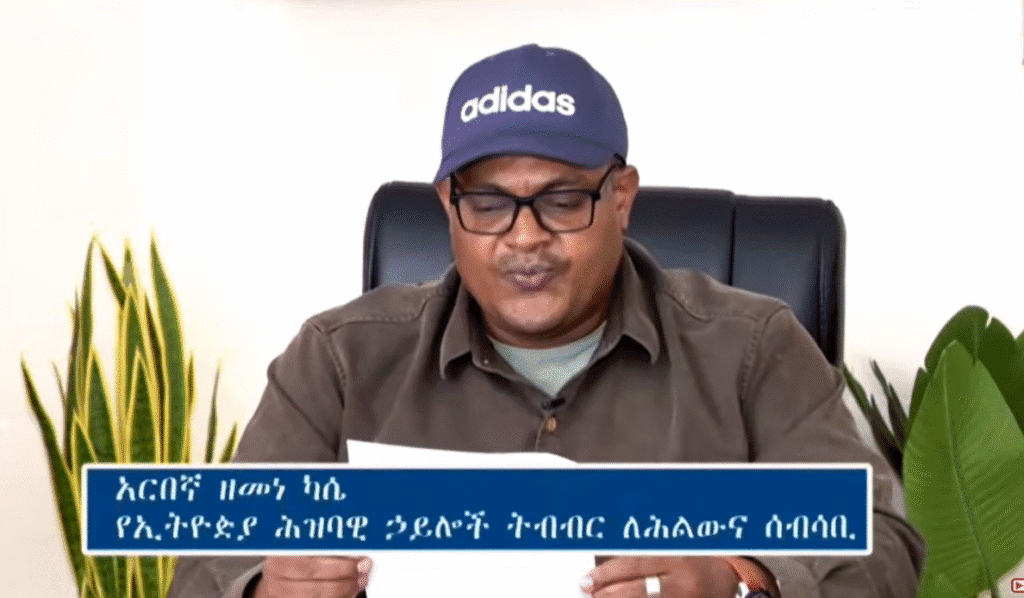
The three-page founding statement was publicly read in a recorded video message by Zemene Kassie, chairman of the Amhara Fano National Movement, who was introduced as the first chair of the newly formed alliance.
The announcement marks the clearest official confirmation yet that the alliance has moved beyond informal contacts and negotiations into a publicly declared political framework.
For weeks, reports about such an alliance had circulated widely. At different times, some actors confirmed talks or cooperation, others denied that a formal alliance had been established, while still others described the discussions as preliminary or procedural. The result was a period of uncertainty in which the existence, structure and purpose of the alliance remained unclear.
The September 20 declaration removes much of that ambiguity.
The statement says:
“We have established a joint alliance called the Ethiopian Peoples’ Forces Alliance for Survival, known in short as the Alliance for Survival.”
The public statement identifies seven member organizations:
- Amhara Fano National Movement
- Oromo Liberation Army
- Tigray People’s Liberation Front
- Ogaden National Liberation Front
- Afar Revolutionary Democratic Unity Front, also known as Ugugumo
- Benishangul Peoples’ Liberation Movement
- Gumuz Peoples’ Democratic Movement
The declaration says these organizations have agreed to coordinate their “popular and organizational capacities” around a shared political objective.
An alliance that brings together former battlefield enemies
One of the most striking features of the new alliance is that some of its members stood on opposite sides during the 2020–2022 Tigray war.
Fano forces and other Amhara forces fought alongside the Ethiopian federal government against the TPLF-led Tigrayan forces during that conflict. Today, representatives of the Amhara Fano National Movement and the TPLF are members of the same formally declared opposition alliance.
That fact alone illustrates how dramatically Ethiopia’s political and military alignments have changed since the end of the Tigray war.
The alliance also includes the Oromo Liberation Army and organizations representing other regions and political constituencies, making it a coalition of groups with very different political histories, grievances and long-term objectives.
This is also why the declaration’s commitment to peacefully resolve disagreements among the member organizations is particularly important.
The statement says:
“We have also agreed to resolve our differences peacefully, on the basis of the freely expressed will of our peoples, principles and a lawful order.”
The declaration does not attempt to resolve all of the disputes that exist among its members. Instead, it appears to postpone some of the most difficult questions to a future political and constitutional process.
Alliance says removal of the current government is its immediate objective
The coalition is highly critical of Prime Minister Abiy Ahmed’s Prosperity Party government.
In the press release, the alliance accuses the government of authoritarian rule, prolonged war, displacement, economic deterioration, violations of rights and worsening insecurity.
These are allegations and political characterizations made by the alliance itself.
The coalition says its immediate objective is to collectively oppose and remove what it describes as the Prosperity Party’s “personalist and dictatorial system” and establish an inclusive transitional government guided by a transitional charter.
The alliance says the proposed transition should create conditions for peace, political participation, human and democratic rights and a broader national political settlement.
Two broad objectives for a transitional period
The press release identifies two major objectives for a future transitional period.
The first is to stop ongoing wars, maintain peace and security, guarantee human and democratic rights, address Ethiopia’s economic and social crises, improve relations with neighboring countries and restore the country’s regional and international standing.
The second is to conduct what the alliance describes as an honest, trustworthy, fully inclusive and participatory popular and constitutional dialogue.
According to the declaration, the most important political and constitutional questions facing Ethiopia should ultimately be addressed through public participation.
This part of the statement is particularly significant because the seven organizations do not necessarily share the same view about Ethiopia’s federal system, territorial questions, constitutional arrangements or future distribution of political power.
The alliance appears to be trying to create enough common ground for cooperation without requiring immediate agreement on every underlying political dispute.
Direct appeal to the Ethiopian armed forces
The alliance also makes a direct appeal to members and commanders of the Ethiopian government’s armed forces.
It calls on them to break with the current administration and join what the coalition describes as a struggle to save the country.
This is one of the strongest indications that the alliance sees its strategy as broader than simple political coordination among opposition organizations.
It is also seeking to influence the cohesion of the state’s security institutions.
Appeal to political organizations and civic groups
The coalition calls on political organizations, civic associations and other groups that accept its objectives to join the alliance.
The press release presents the coalition as open to broader participation and attempts to frame it as a national political front rather than simply an arrangement among seven existing organizations.
Whether other movements or political actors will join remains to be seen.
Message to neighboring countries and the international community
The alliance also addresses Ethiopia’s neighbors, other African governments and the international community.
It asks external actors to support what it describes as the Ethiopian peoples’ pursuit of justice, peace and democracy.
The statement argues that Ethiopia’s internal political crisis has implications for the wider Horn of Africa and that continued instability inside the country threatens regional peace and security.
What could the alliance mean for Ethiopia?
The immediate significance of the announcement is that several major armed and political opposition movements are now publicly declaring that they intend to coordinate rather than operate only through separate regional struggles.
Until now, conflicts involving Fano in Amhara, the Oromo Liberation Army in Oromia and renewed political tensions involving Tigrayan forces have often been treated as distinct crises driven by different historical grievances.
The new alliance attempts to bring several of those struggles into a single national political framework directed against the federal government.
If the coalition develops effective political or military coordination, it could increase pressure on the federal government by creating simultaneous and potentially coordinated challenges across several regions.
It could also make the political conflict more complex because Addis Ababa could increasingly face not only separate armed movements, but organizations presenting themselves as part of a broader national coalition.
At the same time, the alliance faces significant internal challenges.
Its members have different political constituencies, different histories and unresolved disagreements. Some of them were battlefield enemies only a few years ago.
The declaration itself acknowledges these differences and promises that they will be addressed peacefully, but it does not explain in detail how this will be achieved.
What could it mean for the Horn of Africa?
The implications could extend beyond Ethiopia.
Ethiopia is the most populous country in the Horn of Africa and occupies a central geographic and political position in the region. A major escalation of internal conflict or a significant restructuring of political power in Ethiopia would inevitably affect neighboring states.
Possible regional consequences could include increased refugee and displacement flows, greater pressure on border areas, disruption of trade corridors and changes in relations with neighboring governments.
The alliance’s appeal to external actors also suggests that it intends to seek political recognition and diplomatic engagement beyond Ethiopia.
That could make the coalition an increasingly important factor in regional diplomacy if it manages to sustain itself.
Political alliance or military alliance?
One major question remains unanswered by the press release.
The declaration clearly confirms a political and organizational alliance, but it does not explain whether the seven groups have established a unified military command.
There is no detailed public description of a joint headquarters, integrated command structure, common military leadership or coordinated operational mechanism.
For now, the strongest evidence is of a political alliance with an expressed commitment to coordinate organizational capacities.
Whether that evolves into a fully coordinated military structure remains to be seen.
From rumor to official declaration
For weeks, Ethiopians had heard reports that a major alliance was being negotiated.
Some of those reports were confirmed.
Others were denied.
Some participants acknowledged cooperation while disputing claims that a formal alliance already existed.
The September 20 statement changes that.
Zemene Kassie publicly read the founding declaration as the first chair of the new alliance, and the seven organizations were formally named as members.
The alliance now has an official name, declared membership, stated objectives and a proposed political roadmap.
The larger questions begin from here.
Can organizations that were enemies during the Tigray war maintain a common political front?
Can they resolve territorial, constitutional and political disputes peacefully?
Will the alliance remain primarily a political umbrella, or will it develop into coordinated military action?
And how will the Ethiopian government, neighboring states and the wider international community respond?
For now, one point is no longer a matter of speculation:
After weeks of denial, confirmation and uncertainty, the Alliance for Survival has officially declared its existence.