
Detention of Lt General Tadesse Werede and Associates: Chronology of Events, Urgent Concerns, Risks of Transfer to Eritrea, and Biographical Notes
By UMD Media / Oct 2, 2026 / 7 min read
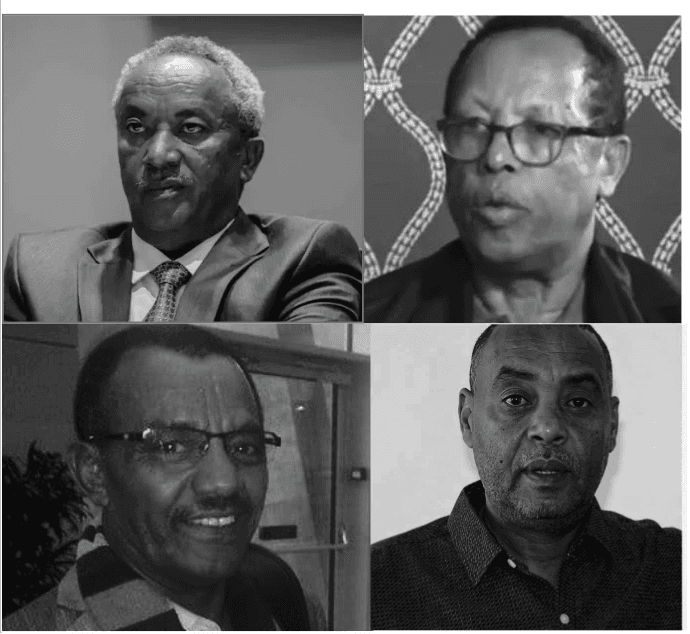
As of 2 October 2026, 7:15 pm local time
7:15 p.m. local time update: Sources told UMD Media that Tesfaye Banda of the Tigray Police Commission was sent to the hotel by Tigray Police Commissioner Yihdego Seyoum, accompanied by around eight other police officers.
According to the sources, General Taddesse Werede and the others refused to leave, telling the officers to bring the person who had ordered their transfer.
There is now growing concern among those close to them that another attempt could be made to remove them from the hotel and take them to Eritrea during the night.
Part I: Chronology of Events
1. Appointment (8 April 2025)
On 8 April 2025, Prime Minister Abiy Ahmed appointed Lt General Tadesse Werede as President of the Tigray Interim Administration, following his nomination by the TPLF Central Committee.
He replaced Getachew Reda, who was appointed Minister Advisor for East African Affairs on 11 April 2025.
In April 2026, the federal government extended General Tadesse’s mandate for a further year; the TPLF rejected this extension.
2. Forceful removal by the TPLF (5 May 2026)
On 5 May 2026, the TPLF announced that it had reinstated the pre-war regional council, which then elected TPLF Chairman Debretsion Gebremichael as regional president.
The federal government continued to recognise General Tadesse’s Interim Administration as the only legitimate authority in Tigray.
General Tadesse’s appointment was made jointly by the federal government and the TPLF within the framework of the Pretoria Agreement.
His removal was carried out unilaterally by the TPLF, outside that framework and with the backing of its affiliated armed forces.
3. House arrest (May – September 2026)
General Tadesse has been under de facto house arrest since his removal on 5 May.
The first public reports emerged in mid-July 2026, when BBC Tigrinya, citing informed sources, reported that he had been confined to his home in Mekelle after security personnel prevented him from leaving to meet US Ambassador Ervin Massinga.
4. Detention (23 September 2026)
On the evening of 23 September 2026, as fighting resumed, the guards at General Tadesse’s residence were replaced, leaving his family unable to enter or leave. This action was carried out under the command of:
- Commissioner Yihdego Seyoum, Tigray Police Commissioner and former Addis Ababa Police Commissioner; and
- Colonel Gebreselassie Belay, Deputy Commissioner of the Tigray Police Commission. Colonel Gebreselassie has faced public criticism and accusations of obstructing justice in the case of the killing of 32-year-old Zewdu Haftu, in which his son is the accused. He holds General Tadesse’s administration responsible for his son’s detention and prosecution, raising serious concerns about a personal motive.
On the same day, the following officials of the Interim Administration were detained and moved to the same place where General Tadesse Werede was detained:
- Colonel Gebregziabher Alemseged
- Colonel Tewelde Gebretensay, head of military intelligence; and
- Mr Isaias Tadesse, former advisor to the Interim President.
All were detained at the same time as General Tadesse.
5. Planned transfer outside Mekelle (2 October 2026)
On 2 October 2026, the same police commissioners informed the detainees that they would be moved outside Mekelle. The detainees and their families, who are gathered at the place of detention (a hotel in Mekelle (name withheld for security), have refused to be moved, and tensions are rising.
There are concerns that the transfer may be attempted at night, as regional government leaders and officials withdraw from Mekelle and other towns in preparation for the mobile insurgency declared by Debretsion Gebremichael on 1 October 2026.
Part II: Urgent Concerns
1. Risk of transfer to Eritrea and extrajudicial killing
If the detainees are moved out of Mekelle, they will be highly vulnerable to abduction and transfer to Eritrean territory, or even to extrajudicial killing.
The Eritrean government is known to be hostile to these individuals and wants them in its custody.
Eritrea’s record on high-profile detainees is grave: the members of the G-15 reform group arrested in September 2001 have been held incommunicado for more than two decades without charge or trial, and the fate of many Ethiopian prisoners of war from the 1998–2000 border war remains unknown. Most are presumed killed or dead.
Removal to Eritrea would place the detainees beyond the reach of any legal protection or diplomatic intervention.
2. Detention for political dissent
The detentions stem from a fundamental disagreement within Tigray’s leadership and the population at large over relations with the federal government and with Eritrea.
General Tadesse, his advisors, and most of his cabinet, as did the public at large, opposed any war with the federal government or other forces. They argued that Tigray would benefit more from peaceful negotiation and full implementation of the Pretoria Agreement, however slow, than from renewed war and a military alliance with Eritrea.
They are being detained for holding this strong position and for staying within Tigray.
They have never been brought before a court of law, no formal charges have been filed, and they have never been allowed to consult their lawyers.
Colonel Gebreselassie Belay, the Deputy Commissioner of the Tigray Police Commission, has faced severe public scrutiny and accusations of obstructing justice regarding the high-profile killing of 32-year-old Zewdu Haftu by his son. He accuses General Tadesse’s administration of detaining his son and having his case investigated and judged by a court of law. He hates Gen Taddese and his cabinet, has openly expressed his intention to arrest General Tadesse and those involved in the arrest of his son, and now has both the opportunity and the means.
Part III: Biographical Notes on the Detainees
All three military officers have devoted their lives, from a young age to the belief that the people of Tigray and Ethiopia deserve to enjoy freedom and development.
Since 1991, the three military officers served in the Ethiopian National Defense Forces (ENDF) and held senior command positions during the 1998–2000 war between Ethiopia and Eritrea.
During the 2020–2022 war on Tigray, all of them were in the leadership of Tigray’s popular resistance of the Tigray Defense Forces (TDF), with General Tadesse serving as Commander-in-Chief.
For these reasons, the Eritrean regime of Isaias Afwerki has a long-standing axe to grind against them.
Today, because they refuse to wage war against the federal government of Prime Minister Abiy Ahmed, they are regarded as enemies of the Eritrean state.
1. Lt General Tadesse Werede
Lt General Tadesse Werede was born on 13 July 1958 in Mekelle.
A senior ENDF commander since 1991, he headed the ENDF’s Joint Training Department before serving as Head of Mission and Force Commander of the UN Interim Security Force for Abyei (UNISFA) from 2011 to 2013.
He became Commander-in-Chief of the Tigray Defense Forces in 2021, leading the popular resistance during the war.
After the Pretoria Agreement, he served as Deputy Chief Administrator of the Tigray Interim Administration and Head of the Cabinet Secretariat for Peace and Security from 25 March 2023 to 8 April 2025.
2. Colonel Gebregziabher Alemseged
Colonel Gebregziabher Alemseged is a former senior ENDF commander who served in the 1998–2000 war with Eritrea.
He later led Ethiopian military operations during much of Ethiopia’s 2006–2009 intervention in Somalia, which removed the Islamic Courts Union from Mogadishu and opened the way for the campaign against al-Shabaab.
From 2008, he served with the Intergovernmental Authority on Development (IGAD), including as Senior Political Advisor and Peace and Security Advisor to the Executive Secretary, and from 2017 as senior political advisor to IGAD’s Somalia Peace Facilitation office, where he was in charge of the Somalia peace process.
Most recently, he served as Advisor to President Tadesse Werede.
The Eritrean government, which backed the Islamic Courts, considers him a central figure behind their removal from Mogadishu and behind the international community’s actions on Somalia and sanctions on Eritrea. Combined with his role in the war of 1998–2000, this has made him a declared enemy of the Eritrean state in the eyes of the Isaias regime.
3. Colonel Tewelde Gebretensay
Colonel Tewelde Gebretensay is a career military intelligence officer. He served in ENDF military intelligence, including during the 1998–2000 war with Eritrea, and was part of the leadership of Tigray’s resistance during the 2020–2022 war.
He has served as head of military intelligence of the Tigray Defense Forces. He was detained alongside General Tadesse on 23 September 2026.
4. Mr Isaias Tadesse
Mr Isaias Tadesse is a former member of the TPLF Central Committee. He served as Advisor to the President of the Tigray Interim Administration, holding the rank of Vice President. He was detained alongside General Tadesse and Colonel Tewelde on 23 September 2026.