
Tigray’s Six-Month Transition of Rotating Presidency? Who Is Really in Charge, and Whose Interests Will It Serve?
By UMD Media
Published
7 min read
142 views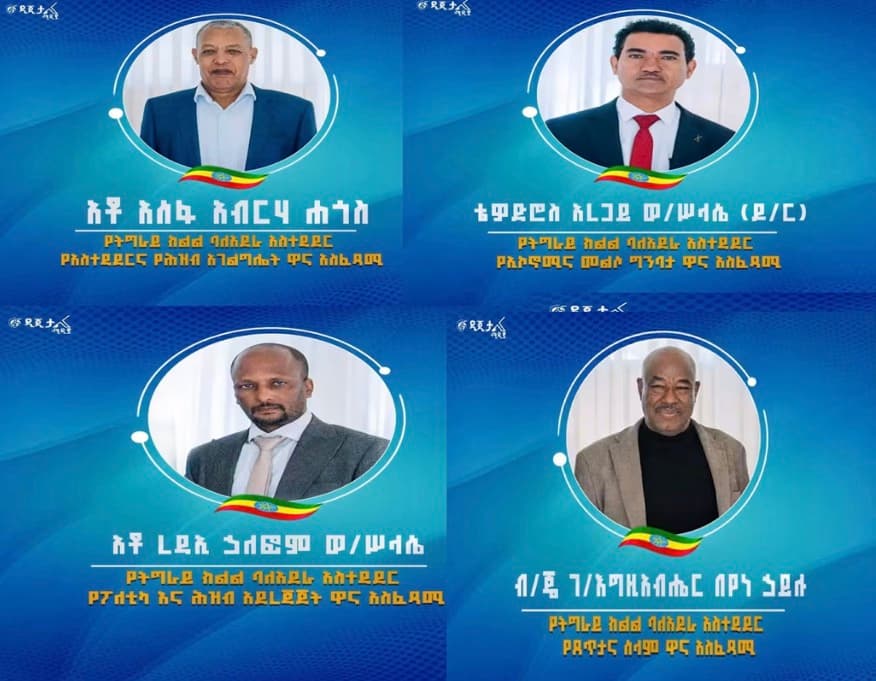
October 18, 2026
The Ethiopian federal government’s establishment of a six-month caretaker administration in Tigray on October 16 has raised questions about who will exercise political authority, how local administrators are being selected, and whether the transition will lead to genuine self-government or replace one political monopoly with another.
Five Appointees, No President — A Rotating Presidency?
Five officials were appointed:
- Assefa Abraha Hagos — Chief Executive Officer of Administration and Public Services. A Pretoria Peace Agreement negotiator and former adviser to Getachew Reda during his presidency of the Tigray Interim Regional Administration (TIRA).
- Dr. Tewodros Aregay Woldeselassie — Chief Executive Officer of Economy and Reconstruction. Affiliated with the Tigray Prosperity Party.
- Brigadier General Gebre-Egziabher Beyene Hailu (Wedi Antiru) — Chief Executive Officer of Peace and Security. A commander of the Tigray Peace Forces (TPF).
- Redae Halefom Woldeselassie — Chief Executive Officer of Political and Public Mobilization. Affiliated with Getachew Reda’s Simret Party.
- Dr. Shishay Amare — Mayor of Mekelle. Also affiliated with Simret.
Unlike previous transitional arrangements, no regional president was appointed.
One source told UMD Media that, instead of appointing a single president, the first four officials will reportedly rotate the presidency, each serving for one and a half months during the six-month transition.
Who authorized it? What legal framework governs the rotation? And how will executive authority and accountability be distributed among the four officials?
Is the Prosperity Party Already Shaping Local Administrations?
According to UMD Media sources, Nebyu Suhulmichael, head of the Tigray Prosperity Party secretariat, has reportedly provided orientations and deployed party representatives to oversee the selection of mayors and woreda administrators.
Sources identified Getachew Negus, Barygabir Abay, Seyoum, and Berhane Adwa, all Prosperity Party members, as among those who reportedly led the selection of local administrators in Maychew, Mekonni, and Wukro. The individuals named had previously served in the federal interim administration under Dr. Mulu Nega.
Another source told UMD Media that Adem Farah, Ethiopia’s Deputy Prime Minister and Vice President of the Prosperity Party, also provided orientations to those involved, outlining what they were expected to do and how the process should be carried out.
One observer warned that these accounts raise serious concerns that the Prosperity Party may be using the transition to establish its organizational structures and consolidate political influence in Tigray ahead of elections expected within six months, calling into question the neutrality of the caretaker administration.
Further questions remain about reports of a possible command post overseeing the transition, including its mandate, composition, authority, and role in political and administrative decisions.
The Opposition Coalition Dissolves as the Transition Begins
On October 16, the Tigray Peace and Change Council announced the dissolution of its organizational structure, just 152 days after its establishment on May 17.
The Addis Ababa-based coalition brought together eight political parties, more than ten civil society organizations, and other political actors opposed to the TPLF-led authorities.
In its final statement, the council acknowledged its coordinated political struggle with the federal government, welcomed the new caretaker administration, and announced that its constituent organizations would continue independently.
Its dissolution raises an important question: Having united against the TPLF, can these political actors now independently defend the interests of Tigray’s people and compete freely, or will they become instruments of a new political establishment?
More Federal Control Than Under Mulu Nega?
Two former officials who spoke with UMD Media suggested that the current arrangement may involve greater federal control than the interim administration established under Dr. Mulu Nega in November 2020.
According to one former official, Mulu Nega was allowed to appoint his cabinet, while local communities participated in selecting administrators, including individuals affiliated with the TPLF.
Today, federal authorities have directly appointed the five senior officials, including Mekelle’s mayor, while questions persist about who controls appointments at the woreda and municipal levels.
The caretaker administration’s powers also extend to political mobilization, media coordination, and security restructuring.
These powers, if exercised without adequate safeguards, could influence the political environment before elections.
The Real Test: Self-Government or Another Political Monopoly?
The federal government must not mistake the rejection of TPLF rule for endorsement of the Prosperity Party. Nor should the people’s exhaustion with war be interpreted as acceptance of externally imposed political arrangements.
Replacing the TPLF’s politico-military monopoly with a Prosperity Party monopoly would not constitute a meaningful political transition. It could instead deepen mistrust and create opportunities for the TPLF leadership to regain political support.
The six-month transition must therefore be judged by whether it guarantees political neutrality, transparent appointments, meaningful public participation, political freedoms, and credible elections.
Above all, the priorities of Tigray’s people must remain central: peace, the return of internally displaced persons, restoration of Tigray’s territorial integrity, recovery from war, and constitutional self-government and shared rule.
The ultimate measure of success is whether the people of Tigray finally gain meaningful agency over their political future, rather than once again becoming instruments of competing political interests.
Timeline of Tigray’s Political Leadership: 2020–October 18, 2026
Since 2020, Tigray has experienced eight distinct periods of political leadership under seven governing arrangements, ranging from a regional government formed after a disputed election to federally appointed administrations, a return to TPLF control, and the latest six-month caretaker administration.
Chronological timeline
January 2018 – November 2020
1. Debretsion Gebremichael — TPLF-led regional government
Already leading Tigray before 2020, Debretsion became president following the September 9, 2020 regional election. The federal government rejected the election’s legality. His government lost control of Mekelle when federal forces entered the city in November 2020.
November 13, 2020 – May 5, 2021 | About 6 months
2. Dr. Mulu Nega — Federal interim administration
Appointed by Prime Minister Abiy Ahmed following federal intervention under Article 62(9) of the Constitution. Headed a federally established transitional administration rather than an elected regional government.
May 5 – June 28, 2021 | About 54 days
3. Dr. Abraham Belay — Federal interim administration
A Prosperity Party official appointed by the federal government to replace Mulu Nega. His administration lost effective control of Mekelle on June 28, 2021, when Tigrayan forces recaptured the city.
June 28, 2021 – March 2023 | About 21 months
4. Debretsion Gebremichael — Restored TPLF-led administration
Returned to effective leadership after Tigrayan forces recaptured Mekelle. His administration governed during the remainder of the war and following the November 2, 2022 Pretoria Agreement, until the establishment of the postwar interim administration.
March 23, 2023 – April 8, 2025 | About 2 years
5. Getachew Reda — Pretoria-based interim administration
Appointed by the Prime Minister under the post-Pretoria framework. Led the Tigray Interim Regional Administration, with a cabinet involving different political and institutional actors. Internal power struggles culminated in his removal from the regional presidency in 2025.
April 8, 2025 – May 5, 2026 | About 13 months
6. Lt. Gen. Tadesse Werede — Interim administration
Appointed by Prime Minister Abiy Ahmed to succeed Getachew Reda. His mandate was extended for another year on April 8, 2026, but the TPLF rejected the extension and displaced his administration the following month. Federal authorities continued to recognize him afterward.
May 5 – October 4, 2026 | About 5 months
7. Debretsion Gebremichael — TPLF-restored regional government
The TPLF reinstated the prewar regional council, which elected Debretsion as president on May 5. He assumed effective control in Mekelle without federal recognition. This arrangement ended in the capital when federal and allied forces entered Mekelle on October 4.
October 16, 2026 – Present | Six-month mandate
8. Federal caretaker administration — No single president appointed
Federal authorities established a six-month administration with five senior appointments, including four functional chief executives and Mekelle’s mayor. Its responsibilities include restoring services, facilitating IDP returns, security and reconstruction, and preparations for elections.
According to a source who spoke with UMD Media, the four chief executives will reportedly rotate the presidency, each serving for approximately 45 days. This rotating arrangement remains unconfirmed publicly.
Summary: How Tigray’s leadership was determined
| Period | Leader | How power was obtained |
| 2020 | Debretsion | Regional council following disputed election |
| Nov 2020 – May 2021 | Mulu Nega | Federal appointment |
| May – Jun 2021 | Abraham Belay | Federal appointment |
| Jun 2021 – Mar 2023 | Debretsion | Return to power after military recapture |
| Mar 2023 – Apr 2025 | Getachew Reda | Federal appointment under Pretoria framework |
| Apr 2025 – May 2026 | Tadesse Werede | Federal appointment |
| May – Oct 2026 | Debretsion | Restored regional council under TPLF control |
| Oct 2026 onward | Four chief executives | Federal appointments; rotation reported but unconfirmed |
Two important qualifications: From May to October 2026, Tadesse remained the federally recognized regional leader even as Debretsion exercised effective authority in Mekelle. From October 4 to October 16, 2026, federal and allied forces controlled the capital before the new caretaker administration was formally established.
The central constitutional question
Across these changes, Tigray has not held another generally recognized regional election since the disputed September 2020 vote.
The distinction between the different administrations:
- 2020: Regional electoral mandate contested by the federal government.
- 2020–2021: Federal intervention and direct appointments.
- 2021–2023: TPLF restoration through military control.
- 2023–2025: Post-Pretoria transitional appointments.
- 2025–2026: Successive changes driven by federal appointments and internal political struggles.
- October 2026 onward: Another federally supervised transition, promising elections within six months.
For UMD Media’s analysis, the critical question is whether the latest administration will finally transfer authority to a constitutionally elected regional government, or whether temporary arrangements will once again determine Tigray’s political leadership without a new electoral mandate.
See something that needs correcting? Report a correction.
More from this section
Detention of Lt General Tadesse Werede and Associates: Chronology of Events, Urgent Concerns, Risks of Transfer to Eritrea, and Biographical Notes
As of 2 October 2026, 7:15 pm local time 7:15 p.m. local time update: Sources told UMD Media that Tesfaye
By UMD Media / Oct 2, 202653 views

Ethiopia's Alliance for Survival Uses First Press Conference to Define Political, Military and Post-Abiy Ahmed Transitional Agenda
Coalition Says Armed Struggle Is Political Instrument, Confirms Joint Military Cooperation, Promises Inclusive Transition and Peaceful Resolution of Disputes September
By UMD Media / Sep 28, 202612 views
Discussion
Keep comments respectful and relevant. No threats, personal attacks, hate speech, spam, or private information. Comments are reviewed before publication.
Loading comments…
Checking discussion availability…